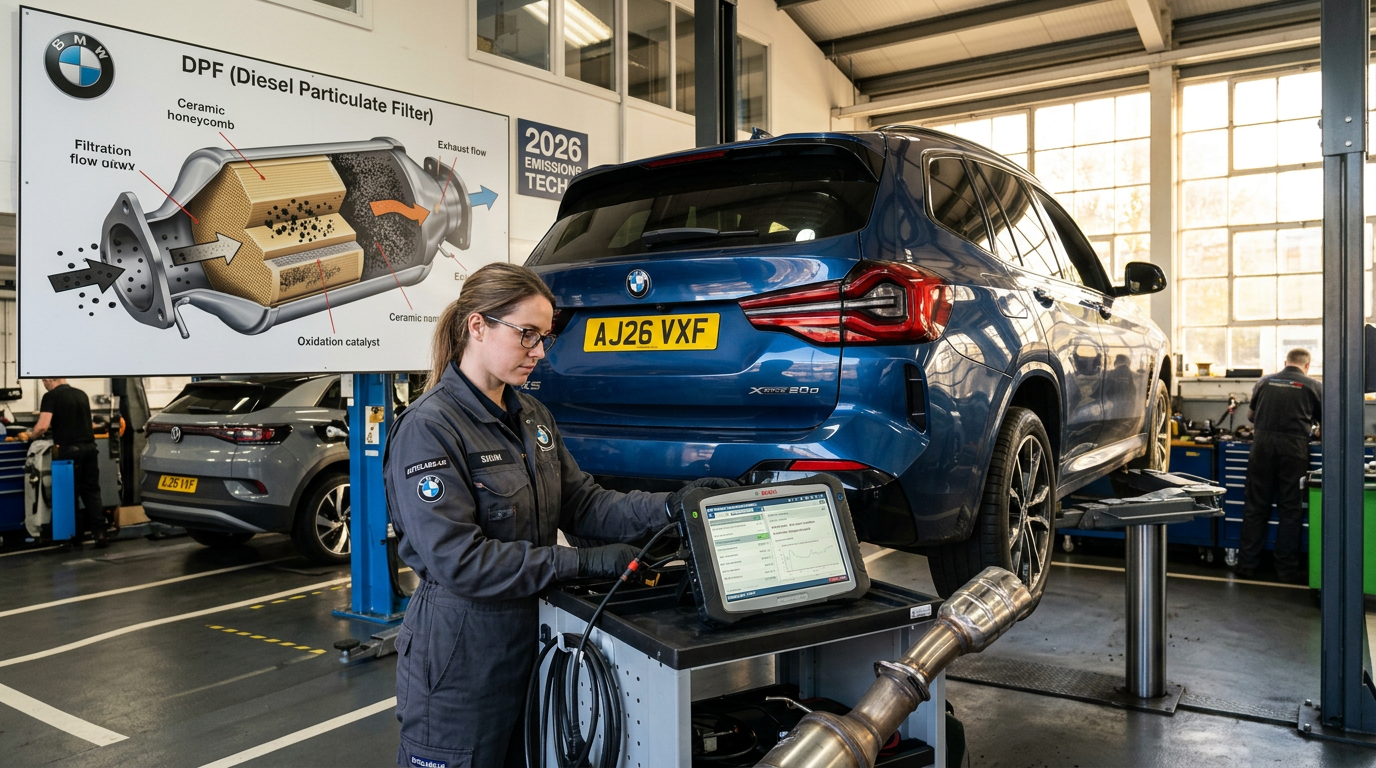
In 2026, the UK’s automotive landscape is increasingly electric, yet millions of motorists continue to rely on Diesel vehicles—particularly the refined Euro 6d-Final models—for their superior long-distance economy and towing capabilities. However, as London’s Ultra Low Emission Zone (ULEZ) and similar Clean Air Zones (CAZ) across Manchester, Birmingham, and Glasgow become stricter, the way we drive these cars has changed.
The biggest threat to a modern diesel engine today isn't fuel quality; it's the Diesel Particulate Filter (DPF). If you are using a post-2015 diesel car primarily for the school run or navigating city traffic, you are operating in the 'danger zone' for DPF health.
Here is everything you need to know about DPF cleaning in 2026 and preventing the dreaded 'limp mode' through smart maintenance.
Understanding the Euro 6 Diesel Ecosystem
Modern Euro 6 diesel engines are marvels of engineering, but they are also incredibly sensitive. To meet the stringent NOx and particulate matter standards required for ULEZ compliance, these vehicles use a two-pronged exhaust after-treatment system:
- The DPF: Traps physical soot particles.
- The SCR (Selective Catalytic Reduction): Uses AdBlue to convert NOx into harmless nitrogen and water.
The problem arises during 'passive regeneration.' This is when the exhaust gets hot enough to burn off the trapped soot naturally. In urban UK driving, where average speeds rarely exceed 20mph, the exhaust never reaches the required temperature. This leads to soot buildup, triggering a forced 'active regeneration' which often fails if the journey is too short.
Identifying the Warning Signs
In 2026, most vehicle dashboards are highly digitized. You won't just see a generic 'Check Engine' light; your car will likely provide a specific DPF warning.
- Stage 1: The Amber Light. The soot level is high. The car needs a 'regeneration run.'
- Stage 2: Limp Home Mode. The car restricts power to prevent engine damage. You will likely need a professional DPF clean.
- Stage 3: Red Light/Engine Failure. The filter is 'face-loaded' or cracked. At this stage, replacement—often costing upwards of £1,500—is usually the only option.
Top Tips for Preventing DPF Clogs in 2026
If you want to avoid the high costs of Euro 6 diesel maintenance, follow these four golden rules:
1. The 20-30-50 Rule
Once every two weeks, or every 300 miles, take your car on a dual carriageway or motorway. Drive at 50mph or more for at least 20 minutes. Crucially, don’t just cruise in top gear; keeping the engine at around 2,000–2,500 RPM helps generate the sustained heat necessary for the DPF to self-clean.
2. Monitor Your AdBlue Levels
AdBlue system faults are now more common than DPF clogs in some 2026 models. If the AdBlue tank runs dry, or the injector crystallises due to low-quality fluid, the car will eventually refuse to start to remain ULEZ compliant. Always use high-quality ISO 22241 standard AdBlue and never ignore the 1,000-mile countdown.
3. Use the Correct Low-Sash Oil
When you book your MOT or service, ensure the garage uses Low-SAPS (Sulphated Ash, Phosphorus, and Sulphur) engine oil. Standard oil produces high levels of ash when burned, which cannot be removed by regeneration and will permanently block your DPF.
4. Smart Fueling and Additives
While premium diesel is more expensive at the pumps, it often contains cleaning additives that help the fuel burn more completely, reducing initial soot production. For older Euro 6 cars, a dedicated DPF cleaner additive added to the fuel tank every 3,000 miles can act as a catalyst to lower the temperature at which soot burns.
Professional DPF Cleaning: What are the Options?
If the amber light won't go out, you'll need professional intervention. In 2026, there are three primary methods:
| Method | Description | Estimated Cost |
|---|---|---|
| Forced Regeneration | A technician uses a diagnostic tool to tell the ECU to perform a high-heat cycle while stationary. | £80 - £150 |
| Chemical On-Car Clean | Specialized liquids are injected into the DPF to break down soot without removing the filter. | £200 - £350 |
| Off-Car Flash Cleaning | The DPF is removed and placed in a specialized machine that uses high-pressure water and air. This removes Ash, which chemicals cannot. | £450 - £700 |
For those looking to trade in their diesel for something more city-friendly, checking your car's valuation on CarsLink.ai is a smart first step before expensive repairs become necessary.
The Legal and Financial Reality
It is worth noting that 'DPF removal' or 'DPF gutting' is illegal in the UK. Under current DVLA and Department for Transport regulations, any vehicle found to have its DPF tampered with will automatically fail its MOT. Furthermore, your insurance will be voided, and you could face fines of up to £1,000 for a car or £2,500 for a van.
With road tax (VED) for older diesels remaining high and ULEZ zones expanding, maintenance is no longer optional—it's a financial necessity to preserve your vehicle's resale value.
Conclusion
Owning a diesel in 2026 remains a logical choice for high-mileage drivers, particularly those who frequent the UK's motorway network. However, for urban drivers, the DPF requires proactive management. By understanding the regeneration cycle and staying on top of AdBlue systems, you can avoid the four-figure repair bills that plague many modern diesel owners.
Are you worried about the rising costs of Euro 6 maintenance, or perhaps looking to switch to a Plug-in Hybrid or EV? Visit CarsLink.ai to explore the latest market trends, compare ULEZ-compliant alternatives, and get an expert valuation on your current diesel vehicle.