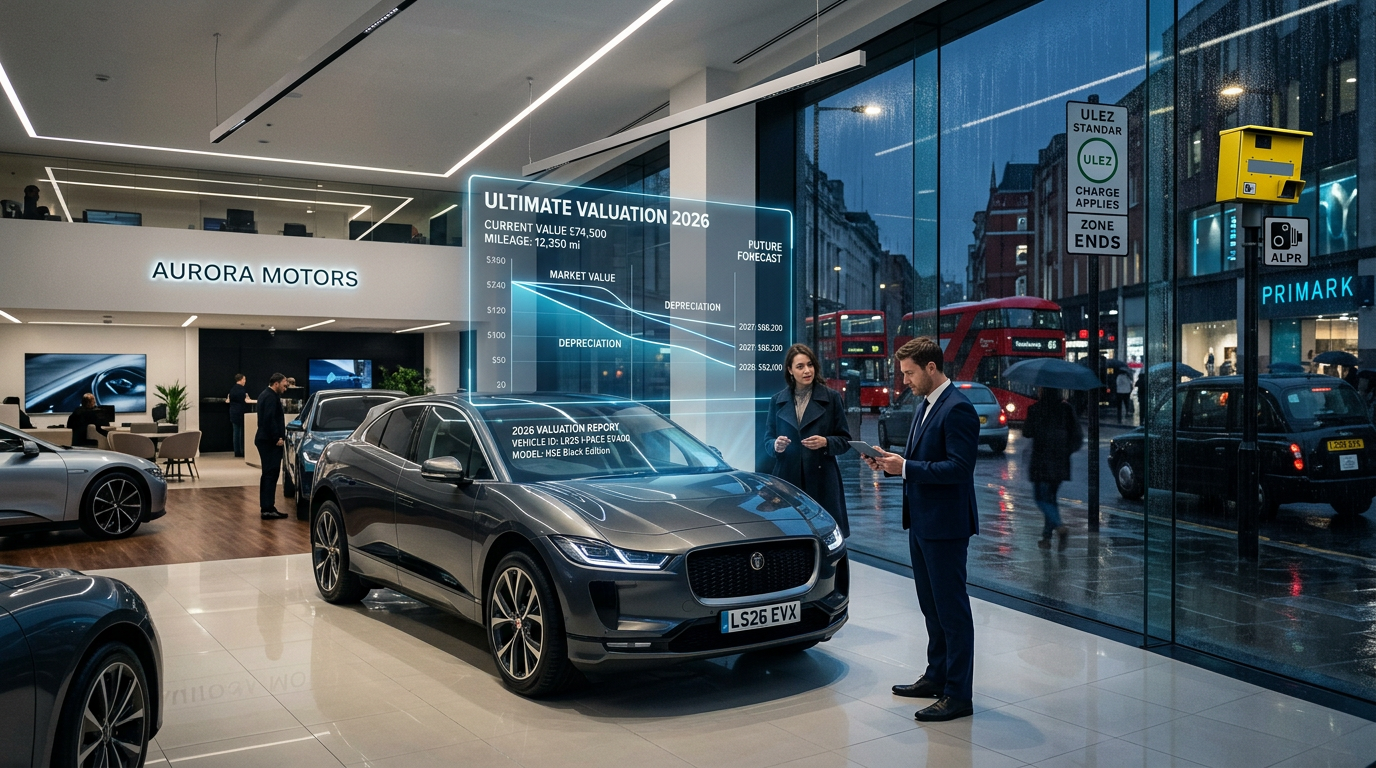
In the fast-moving automotive landscape of 2026, determining the exact value of your vehicle has become a high-stakes game of data science. With the UK government’s Zero Emission Vehicle (ZEV) mandate now in its third year of tightened quotas, the delta between what an algorithm says your car is worth and what a real buyer will pay has never been wider.
Whether you are looking to sell my car UK or trade up for a newer EV, you have likely encountered the instant AI appraisal. While convenient, these automated tools often miss the nuanced "British factor." Relying solely on a screen-generated number could see you leaving thousands of pounds on the table.
The Rise of AI in 2026 Car Valuations
By 2026, AI has become the backbone of the used car trade. Platforms ingest millions of data points from the DVLA, auction houses, and online marketplaces to provide an instant figure. However, these systems are built on historical trends—and history is currently a poor guide for the unprecedented volatility of today’s market.
Why the 'Standard' Algorithm Fails
Most valuation AI operates on a "mean average" logic. It looks at a 2023 BMW 3 Series, checks the mileage against the average, and adjusts for the current month. But in 2026, used car prices are dictated by hyper-local factors that algorithms often overlook:
- ULEZ and CAZ Expansion: As more UK cities implement Clean Air Zones or expand existing ULEZ boundaries, a car's value can fluctuate by 15% simply based on whether it sits five miles inside or outside a specific postcode.
- Battery Health (SoH): For EVs, generic AI often treats a car with 40,000 miles the same. However, a State of Health (SoH) certificate proving 96% battery retention adds significant value that a standard VRM (Vehicle Registration Mark) lookup cannot detect.
- The "Optional Extra" Trap: AI frequently ignores high-value factory options like panoramic roofs, upgraded sound systems, or advanced driver assistance systems (ADAS) that savvy UK buyers actively seek out.
4 Reasons Your AI Appraisal Might Be Underestimating Your Car
If you’ve recently used an automated tool and felt the number was low, you are likely right. Here is where the digital gap usually sits.
1. The Service History Premium
In 2026, with the cost of parts and labour at record highs, a full main-dealer service history is worth its weight in gold. AI tools often assume a "partial" history as a default. If your V5C is backed up by a pristine digital service record or a stack of invoices from a reputable specialist, you are looking at a 5-10% premium that an algorithm won't automatically apply.
2. Vehicle Depreciation UK: The 2026 ICE Paradox
We are seeing a fascinating trend in vehicle depreciation UK this year. While many predicted Internal Combustion Engine (ICE) vehicles would plummet, the scarcity of high-quality Euro-6 petrol and diesel cars has created a price floor. As manufacturers pivot almost entirely to EVs, well-maintained petrol cars are becoming "modern classics" for those not yet ready to switch. AI often over-accelerates the depreciation curve, failing to account for this supply-side squeeze.
3. Regional Demand Variance
A 4x4 SUV is worth significantly more in the Scottish Highlands or rural Wales than it is in Central London. While some platforms attempt to geo-fence valuations, they rarely account for seasonal shifts—like the sudden spike in convertible prices during a projected May heatwave or the premium on AWD vehicles following a Met Office Amber warning.
4. The "CarsLink.ai" Factor
Traditional AI looks at the past; modern marketplaces look at the intent. Platforms like CarsLink.ai bridge the gap by connecting real-time buyer demand with vehicle specifics. When you use a data-driven ecosystem that understands the UK market's unique quirks, you move beyond the "blind" algorithm to a valuation rooted in current buyer appetite.
Comparing Valuation Methods in 2026
| Method | Speed | Accuracy | Best For... |
|---|---|---|---|
| Instant AI Tool | < 1 Min | Low-Medium | Getting a "ballpark" figure for a common car. |
| Main Dealer PX | 30 Mins | Medium | Convenience when buying a new car on PCP. |
| Specialist Appraisal | 24 Hours | High | Performance, luxury, or high-spec EVs. |
| CarsLink.ai Analysis | Real-time | Very High | Maximising value through data + market reach. |
How to Beat the Algorithm and Get Your True Value
If you want to ensure you aren't being undervalued, follow these three steps before you hit "sell":
Perfect Your Paperwork
Ensure your MOT history is clear of "advisories." A car with a fresh, 12-month clean MOT certificate is far more attractive to the trade than one with three months left and a note about thinning brake pads. In 2026, buyers are more risk-averse than ever.
Highlight "Hidden" Upgrades
Did you fit premium Michelin tyres recently? Did you have the car ceramic coated? These aren't captured by your number plate. Document these and ensure they are mentioned in any manual override of an AI valuation.
Understand the Road Tax and Benefit-in-Kind (BIK) Impact
For 2026, the road tax (VED) landscape has shifted again. If your car falls into a lower tax bracket or retains a specific BIK advantage for business users, highlight it. Algorithms often lump all cars of a certain engine size together, missing the specific emissions cut-offs that save owners hundreds of pounds annually.
The Future of Car Valuation 2026
The trend for the remainder of 2026 suggests that car valuation 2026 will become even more fragmented. We are moving away from a "national price" toward a "bespoke price." The rise of Predictive Analytics is helping, but it still cannot replace the visual inspection of a well-kept interior or the puff of smoke-free startup on a cold morning.
As we navigate this transition period between fossil fuels and electric power, the human element of car selling—telling the story of the vehicle—remains your greatest asset in securing a fair price.
Summary
Don't let a generic algorithm dictate the worth of your hard-earned asset. AI appraisals are a starting point, not a final verdict. By understanding the factors that influence used car prices 2026, from battery health to ULEZ compliance, you can position your vehicle to attract the best possible offers.
Ready to see what your car is truly worth in today’s market? Visit CarsLink.ai to explore our data-driven tools designed specifically for the UK automotive landscape. Whether you’re looking for a quick sale or the best possible price, we help you navigate the complexities of 2026 valuations with ease.
Get your accurate valuation today at CarsLink.ai.",excerpt: